Wondering whether living near the Albuquerque Foothills is all about mountain views, or if the day-to-day lifestyle really lives up to the setting? If you are considering a move to this part of Albuquerque, you probably want more than a pretty backdrop. You want to know how it feels to get around, what the homes are like, and how outdoor access fits into everyday life. Let’s dive in.
Foothills Living at a Glance
Living near the Albuquerque Foothills often means trading a dense city feel for a more spread-out, edge-of-mountain lifestyle. The Foothills Community Planning Area stretches between I-40 and the northern city limits, and between Eubank Boulevard and the base of the Sandias. City planning materials describe it as primarily low-density residential, with shopping centers and commercial areas along major roads.
In practical terms, that means you are likely to experience a suburban layout with detached homes, larger road corridors, and strong access to outdoor space. It is not a walk-everywhere urban setting. Instead, it offers a driver-friendly setup with a strong connection to the mountains.
The Sandias Shape Daily Life
The Sandia Mountains are a major part of what makes this area feel distinct. They are not just a scenic backdrop. They influence how neighborhoods are laid out, how homes sit on lots, and how residents use the outdoors week to week.
The City of Albuquerque has protected a significant amount of foothills open space over time, including about 1,000 acres acquired in the Sandia foothills as part of broader preservation efforts. That long-term protection helps explain why the area still feels closely tied to the natural landscape.
For many buyers, this is the biggest appeal. You are not simply near parks here. You are living beside a large, managed open-space system that helps preserve the area’s character.
Neighborhoods Are Varied, Not One-Note
One of the most helpful things to know is that the Albuquerque Foothills are not one single neighborhood. The broader planning area includes places such as High Desert, Glenwood Hills, Four Hills, Embudo Canyon, and Tanoan, among others.
That variety matters when you are home shopping. Some areas feel more tucked into the hillside, while others feel more like established suburban neighborhoods near major roads and shopping. Even within the foothills, the experience can change depending on lot placement, elevation, and how close you are to open-space access points.
If you are relocating, this is where local guidance can really help. Two homes may both be described as “in the foothills,” but the daily experience can feel quite different.
Trail Access Is a Real Lifestyle Perk
If you picture morning walks, weekend hikes, or quick after-work trail time, the foothills can deliver on that. Sandia Foothills Open Space covers about 2,650 acres at the base of the mountains. The landscape includes steep hills, gravelly drainages, shrubs, wildflowers, piñon-juniper, and local wildlife.
The city lists multiple access points, including Elena Gallegos, Embudito, Piedra Lisa, Menaul, Embudo Canyon, Copper, and Manzano/Four Hills. That means trail access is built into the area in a meaningful way, not treated as an occasional destination across town.
For many residents, trail use becomes part of normal life rather than a special outing. Even if you are not hiking every weekend, it is easy to see why the outdoors becomes part of the rhythm of living here.
What outdoor use looks like
The open-space system is designed for low-impact recreation. City rules allow activities such as hiking, bicycling, mountain biking, inline skating, and horseback riding on most open-space lands. Bikes must stay on established trails, and the system follows posted gate and access hours.
Seasonal hours are also worth knowing. Sandia Foothills Open Space is open from 7 a.m. to 7 p.m. in winter and from 7 a.m. to 9 p.m. in summer. If trail access is a major reason you want to live nearby, these details help set realistic expectations for everyday use.
Weekend options go beyond the neighborhood
The foothills lifestyle also opens the door to bigger outings. The nearby Sandia Crest area can be reached in minutes via NM 536 or the Sandia Peak Tramway, with wide views over Albuquerque, the Rio Grande Valley, and the surrounding mountain horizon.
Some developed recreation areas may include day-use fees. For example, the Juan Tabo Picnic Site requires a $5 per vehicle daily fee. It is a small detail, but it is useful to know if you plan to spend a lot of time exploring nearby mountain areas.
Homes Often Feel More Spacious
The foothills housing pattern is generally low-density, and city planning documents indicate that new residential development in the area is mostly single-family homes. That does not mean every property is large or custom. It does mean the built environment is usually shaped more by detached housing than by dense apartment or townhome clusters.
For buyers, that often translates to a more open visual feel between homes and a stronger connection to terrain, views, and lot shape. In some spots, the house itself may feel secondary to the land around it.
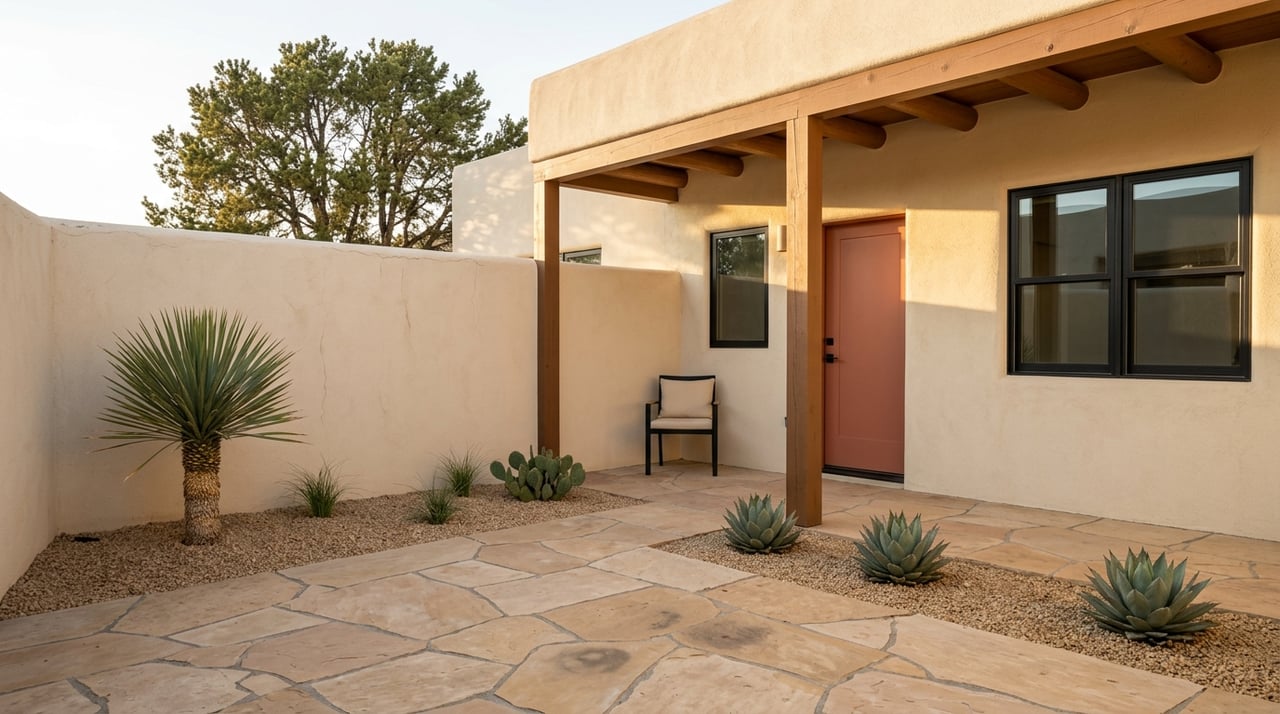
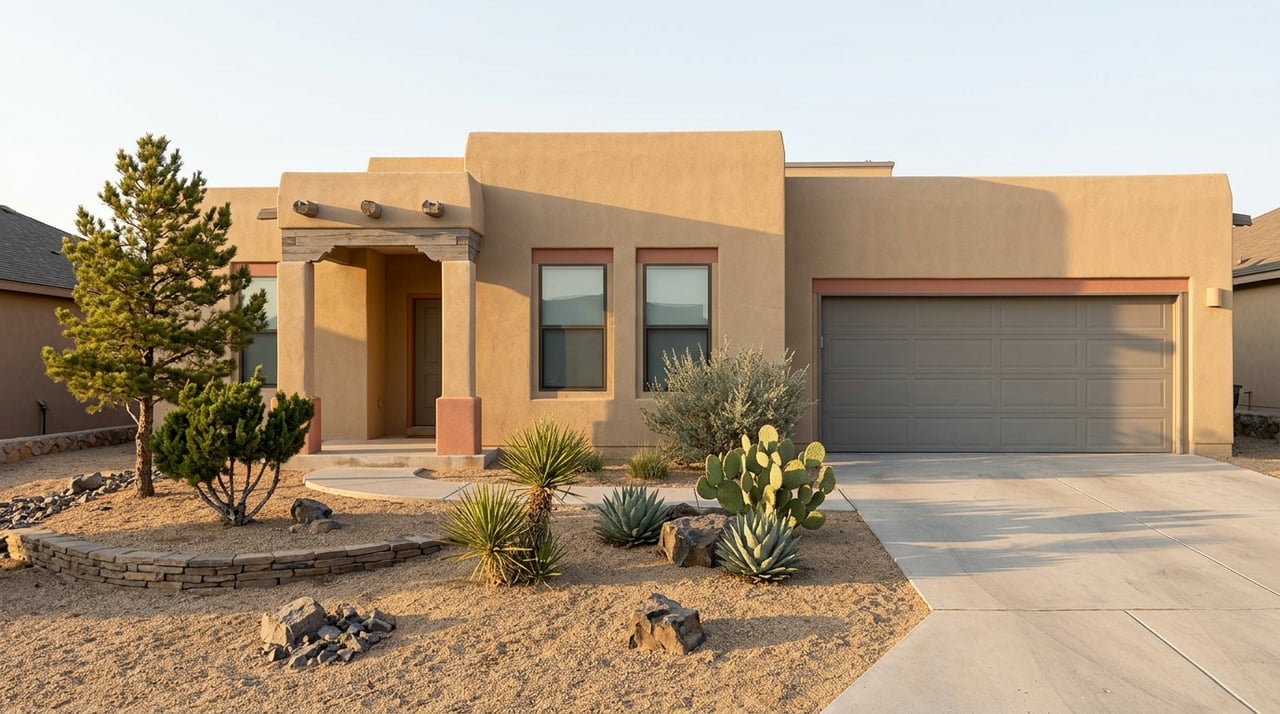
Architecturally, Albuquerque has a broad residential mix. You may see custom Southwest-inspired homes with features like stucco exteriors, flat roofs, parapets, and vigas, along with later suburban subdivisions that reflect postwar planning patterns such as curving streets, cul-de-sacs, and ranch-style or modernist influences.
Terrain affects the home experience
In the foothills, the land matters. Slopes, drainage, and lot placement all shape how homes fit into the landscape. City planning materials for the Sandia Foothills emphasize steep-slope safety and the protection of natural and cultural resources as primary concerns.
That means the lifestyle is not just about scenic views. It is also about understanding how a property sits on its site, how the grade affects access and outdoor space, and how the setting influences the overall feel of the home.
Getting Around Is Usually Car-First
If you are moving from a denser part of town, this is one of the biggest lifestyle differences to expect. The foothills area is connected by major arterial roads rather than a tight street grid. City documents identify Tramway Boulevard and I-40 as commuter corridors, with Juan Tabo Boulevard and Menaul Boulevard as multimodal corridors, and Montgomery Boulevard and Lomas Boulevard as major transit corridors.
That road pattern shapes daily life. Most errands, school runs, appointments, and commutes tend to funnel through a handful of key east-side routes. So while the foothills are not isolated, travel usually depends on planning around the main roads.
For many buyers, that tradeoff feels worth it. You give up some walkability, but you gain mountain access, open space, and a more residential setting.
Transit exists, but it is not the main story
Transit is available, but it sits within a mostly car-oriented pattern. ABQ RIDE’s ART service runs along Central Avenue from Central & Unser to Central & Tramway, with stations spaced about every half mile and buses arriving roughly every 20 to 30 minutes.
The Montgomery & Tramway Transit Center is also an established transfer point on the east side. So if transit matters to you, there are useful connections, but the most accurate expectation is still a mixed setup with driving as the primary mode for many households.
What the Lifestyle Feels Like
So what is it really like living near the Albuquerque Foothills? For many people, it feels calmer, more spacious, and more connected to the natural setting than other parts of the city. The mountains are part of your daily backdrop, and outdoor access is not just theoretical.
At the same time, it is important to go in with clear expectations. This is generally not a compact, urban environment where most errands happen on foot. It is a low-density residential area where major roads matter, terrain matters, and the outdoors is a central part of the appeal.
That balance is what draws many buyers in. If you want Albuquerque living with trailheads, hillside neighborhoods, and a strong sense of place, the foothills offer a lifestyle that is hard to duplicate elsewhere in the metro.
If you are weighing whether the foothills are the right fit for your move, having clear local context can make the decision much easier. The team at New Mexico Dreamin LLC can help you compare neighborhoods, understand the feel of different foothills areas, and take the next step with a clear plan.
FAQs
What is the Albuquerque Foothills area like for everyday living?
- The foothills area generally offers a low-density, suburban feel with detached homes, major road access, shopping along key corridors, and close proximity to the Sandia Mountains and open space.
Are there trails near homes in the Albuquerque Foothills?
- Yes. The Sandia Foothills Open Space has multiple access points, including Elena Gallegos, Embudito, Piedra Lisa, Menaul, Embudo Canyon, Copper, and Manzano/Four Hills.
What kinds of homes are common near the Albuquerque Foothills?
- Buyers will often find single-family homes, including hillside properties, custom Southwest-inspired designs, and homes in later-era suburban subdivisions.
Is commuting from the Albuquerque Foothills easy?
- Commuting is usually shaped by major roads such as Tramway Boulevard, I-40, Juan Tabo Boulevard, Montgomery Boulevard, Menaul Boulevard, and Lomas Boulevard, so most households experience the area as car-first.
Are there rules or hours for Albuquerque Foothills trails?
- Yes. Sandia Foothills Open Space has seasonal hours of 7 a.m. to 7 p.m. in winter and 7 a.m. to 9 p.m. in summer, and open-space rules require activities like biking to stay on established trails.