Wondering whether Santa Fe is worth the higher price tag compared with Albuquerque, Rio Rancho, and other nearby markets? If you are trying to balance budget, home style, and location, that question is very real. This guide breaks down how Santa Fe’s housing market compares on price, inventory, pace, and housing feel so you can make a more confident move. Let’s dive in.
Santa Fe stands apart on price
If you compare the core numbers first, Santa Fe is clearly one of the most expensive markets in this group. Realtor.com market snapshots for spring 2026 show a median sold price of $515,000 in Santa Fe, compared with $346,812 in Albuquerque and $365,101 in Rio Rancho. Santa Fe also posts the highest price per square foot among those three at $377, versus $220 in Albuquerque and $222 in Rio Rancho.
That gap matters because it changes what your budget can buy. Santa Fe often attracts buyers who value its distinct housing character and established identity, but that comes with a significantly higher entry point than the larger metro alternatives nearby. In simple terms, Santa Fe feels expensive before it feels competitive.
What monthly costs look like
Using Freddie Mac’s 30-year fixed rate of 6.36% as of May 14, 2026, with 20% down, the estimated principal and interest payment for a median sold home looks very different by market. In Santa Fe, that estimate is about $2,566 per month. In Albuquerque, it is about $1,728, and in Rio Rancho, about $1,819.
That means a median Santa Fe home costs about $838 more per month than Albuquerque and about $747 more per month than Rio Rancho in principal and interest alone. Those estimates do not include taxes, insurance, HOA dues, or loan fees, so your full monthly payment would be higher. Still, the comparison gives you a clear sense of how much more budget Santa Fe may require.
Santa Fe vs. Albuquerque and nearby markets
Here is a quick side-by-side view of the main markets many buyers compare:
| Market | Median Sold Price | Active Listings | Median Days on Market | Price per Sq. Ft. |
|---|---|---|---|---|
| Santa Fe | $515,000 | 1,101 | 58 | $377 |
| Albuquerque | $346,812 | 2,296 | 52 | $220 |
| Rio Rancho | $365,101 | 1,920 | 58 | $222 |
| Los Lunas | $309,326 | 481 | 77 | $208 |
| Edgewood | $462,500 | 134 | 55 | $249 |
| Placitas | $644,962 | 114 | 92 | $281 |
| Corrales | $807,500 | 71 | 49 | $308 |
| Los Alamos | $645,000 | 48 | 72 | $293 |
The table shows why Santa Fe is often compared first with Albuquerque and Rio Rancho. Albuquerque and Rio Rancho are the most obvious lower-cost alternatives, while Los Lunas comes in as the most budget-friendly option in this set. Placitas, Corrales, and Los Alamos sit in a more premium or niche category rather than serving as direct lower-cost substitutes.
Inventory in Santa Fe is broad, but not the biggest
Santa Fe has 1,101 active listings, which gives buyers meaningful choice across different areas and price points. That is fewer than Albuquerque’s 2,296 and Rio Rancho’s 1,920, but still enough to create real variety. Compared with smaller nearby markets like Edgewood, Placitas, Corrales, and Los Alamos, Santa Fe offers much more depth.
That matters because inventory affects how flexible your search can be. In thinner markets, a small number of listings can shift prices or market averages quickly. In Santa Fe, the number of active listings is large enough to give you a broader picture and more options than many of the smaller surrounding communities.
Santa Fe is not the fastest market here
One of the more helpful takeaways is that Santa Fe is not the fastest-moving market in this comparison. Its median days on market is 58, which matches Rio Rancho and is slightly slower than Albuquerque at 52 days. Corrales is quicker at 49 days, while Placitas is much slower at 92 days.
This is important if you are a buyer who assumes higher prices always mean intense speed. In Santa Fe, the challenge is often price more than pace. You may have a bit more time to evaluate options than you would in a true rush market, but you still need to be realistic about what your budget can support.
Buyer’s market labels add useful context
Realtor.com characterizes Santa Fe, Albuquerque, Rio Rancho, Los Lunas, Edgewood, Placitas, and Corrales as buyer’s markets. Los Alamos stands out as the exception, with homes selling at about 105% of asking, which Realtor.com characterizes as a seller’s market. That tells you price alone does not explain everything.
For Santa Fe shoppers, this may be reassuring. A higher-priced market can still offer room for negotiation or more breathing room than you might expect. At the same time, each home is different, so condition, location, and pricing strategy still matter a great deal.
Santa Fe’s housing stock has a distinct feel
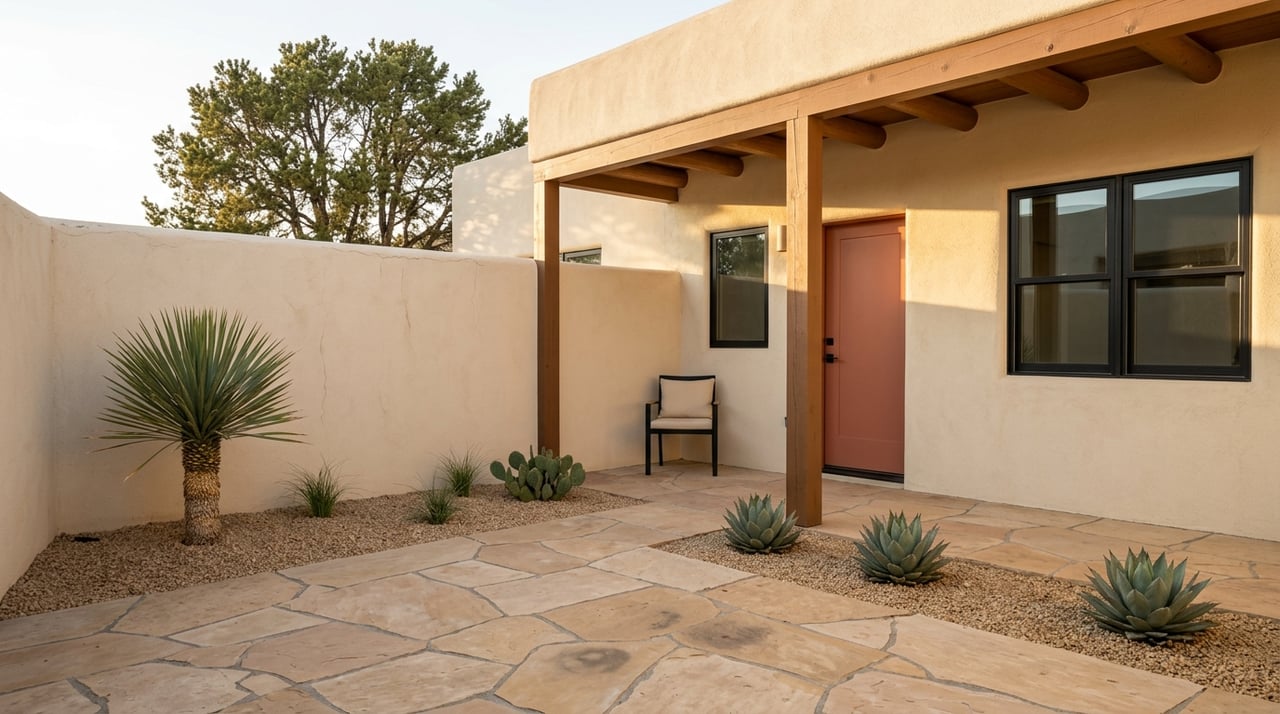
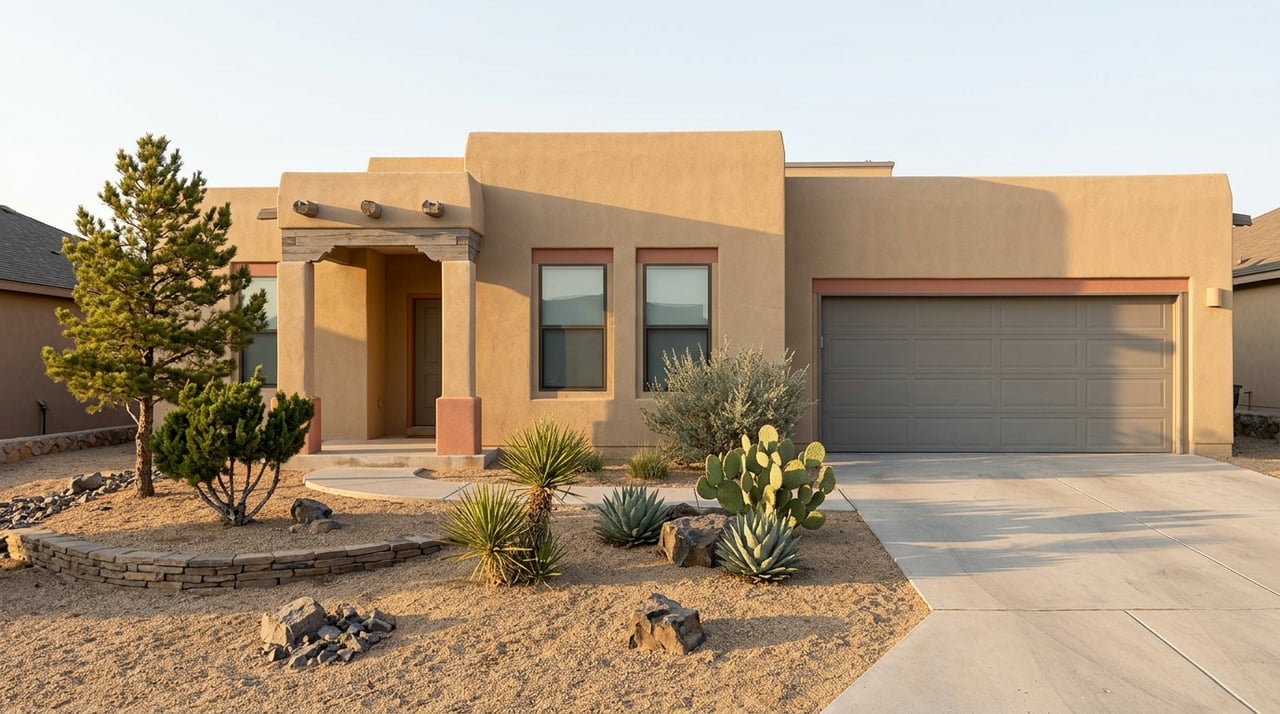
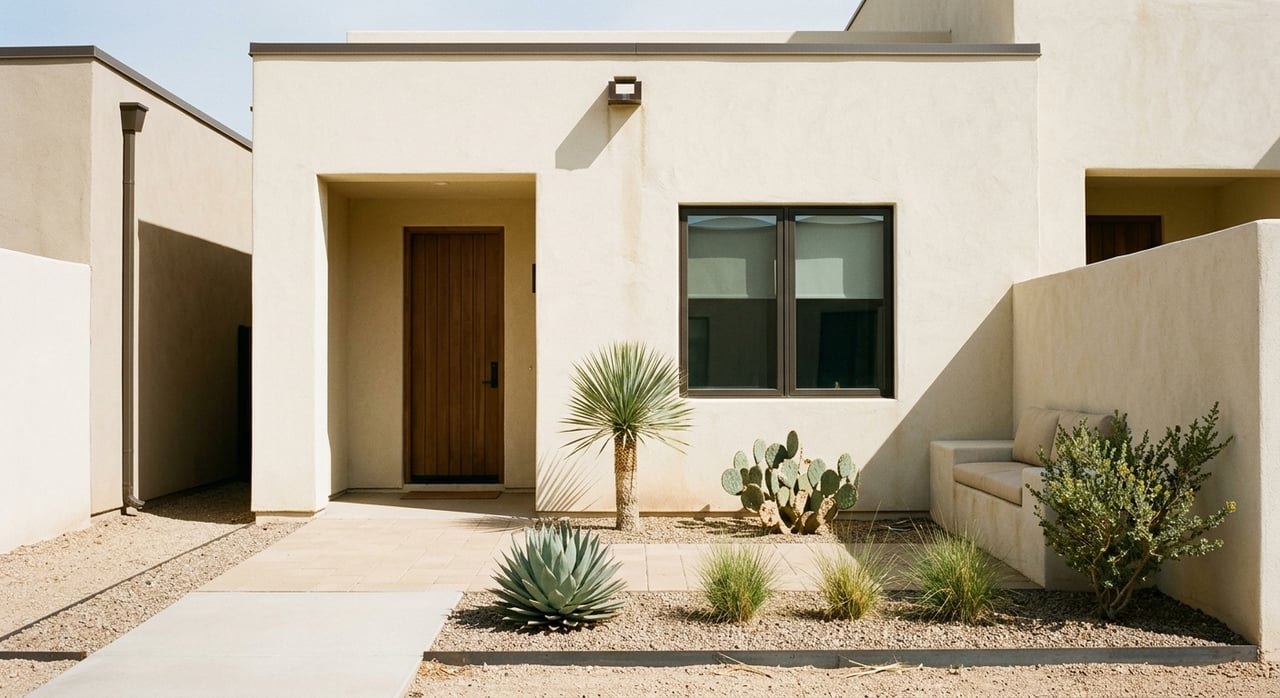
Price is only part of the story. Santa Fe also stands apart because of its housing character and long-established design identity. According to official city urban design guidance, Santa Fe’s traditional residential pattern included adobe buildings along narrow streets, often arranged around a central patio or placita, and older areas around the Plaza and Canyon Road still reflect that pattern.
That architectural consistency helps explain why Santa Fe can feel so different from many other New Mexico markets. Buyers are often paying not just for square footage, but also for a specific built environment and visual identity. If that style is important to you, Santa Fe may offer something that is hard to replicate elsewhere.
Albuquerque offers a more mixed housing mix
Albuquerque presents a broader blend of housing eras and styles. City preservation materials describe older neighborhoods with adobe buildings and simple Folk Victorian forms, with 1930s to 1950s housing often using modified Spanish Pueblo Revival details and later ranch-style elements. The same source notes that newer construction is interwoven through older neighborhoods.
For you as a buyer, that can mean more variety in both home type and price point. Albuquerque may not have the same concentrated historic character as Santa Fe, but it offers a wider mix of options across a larger metro area. That can be especially helpful if flexibility matters more than a specific architectural feel.
Rio Rancho feels newer and more subdivision-driven
Rio Rancho is a different type of comparison altogether. The city traces its origins to Rio Rancho Estates in the 1960s, and its planning framework includes many development-area master plans. That supports the view of Rio Rancho as a market shaped more by newer subdivisions and planned growth than by a historic urban core.
If you want newer neighborhood patterns, more modern subdivision layouts, or a different value equation than Santa Fe, Rio Rancho may be worth a close look. It does not mirror Santa Fe’s design identity, but it gives buyers another path, especially when price is a major factor.
How to think about nearby alternatives
Once you look beyond Albuquerque and Rio Rancho, the surrounding markets serve different needs. Los Lunas is the most affordable in this set by median sold price. Edgewood lands closer to Santa Fe in sold price but remains far smaller in inventory. Placitas, Corrales, and Los Alamos are better understood as premium or niche alternatives, not budget backups.
These markets also have thinner inventory, which can make the numbers move more quickly from month to month. For example, Corrales has only 71 active listings and Los Alamos just 48. When supply is that limited, a few sales can shape the market snapshot in a big way.
What this means if you are buying
If you are deciding between Santa Fe and Albuquerque-area options, start with your budget, then weigh your priorities. Santa Fe offers a distinct housing experience and strong visual identity, but it demands more from your monthly payment in most cases. Albuquerque and Rio Rancho often give you lower prices and more metro-style variety.
A helpful way to think about it is this:
- Choose Santa Fe if housing character, established design identity, and the city’s unique feel are high on your list.
- Compare Albuquerque if you want more variety in housing stock and a lower median price.
- Consider Rio Rancho if a newer subdivision environment fits your goals.
- Look at Los Lunas if affordability is the top priority in this group.
- Treat Placitas, Corrales, and Los Alamos as specialized markets with their own pricing dynamics.
What this means if you are selling
If you own in Santa Fe, the comparison helps explain your market position. Your home may sit in a higher-priced category than many regional alternatives, which can attract buyers looking for Santa Fe’s specific appeal rather than just the lowest payment. That makes pricing and presentation especially important.
Because Santa Fe is described as a buyer’s market and homes are taking a median 58 days to sell, sellers benefit from a clear launch plan and realistic expectations. Buyers may have options, so your pricing strategy, condition, and first impression all matter. A structured, step-by-step approach can help reduce stress and improve your odds of a strong start.
The bottom line on Santa Fe vs. beyond
Santa Fe is not just another stop in the central New Mexico housing map. It is a higher-cost, design-driven market with broad enough inventory to offer choice, but with a much steeper price point than Albuquerque, Rio Rancho, or Los Lunas. For many buyers, the key question is not whether Santa Fe is better, but whether its distinct character is worth the premium for your goals.
If you want help comparing Santa Fe with Albuquerque, Rio Rancho, Edgewood, Placitas, or other nearby markets, New Mexico Dreamin LLC can walk you through the options step by step and help you make a confident plan.
FAQs
How does Santa Fe home pricing compare with Albuquerque?
- Santa Fe’s median sold price is $515,000, compared with Albuquerque’s $346,812, and Santa Fe’s price per square foot is also much higher at $377 versus $220.
How does Santa Fe home pricing compare with Rio Rancho?
- Santa Fe’s median sold price is $515,000, while Rio Rancho’s is $365,101, and Santa Fe also has a much higher price per square foot at $377 compared with $222.
Is Santa Fe a buyer’s market or a seller’s market?
- Realtor.com characterizes Santa Fe as a buyer’s market in the spring 2026 market snapshot.
How fast are homes selling in Santa Fe compared with Albuquerque?
- Santa Fe’s median days on market is 58, which is slightly slower than Albuquerque’s 52 days.
What makes Santa Fe housing feel different from Albuquerque or Rio Rancho?
- Official city guidance describes Santa Fe’s traditional pattern as adobe buildings along narrow streets, often around patios or placitas, while Albuquerque has a more mixed housing stock and Rio Rancho has a more subdivision- and master-plan-driven development pattern.
Which nearby market is the most affordable compared with Santa Fe?
- In this comparison set, Los Lunas has the lowest median sold price at $309,326, making it the most budget-friendly option listed here.